Posts

How to Trim Chicken Beaks, Claws, and Spurs

Image
A chicken’s spurs, claws, and beak are made of keratin; the same substance as your finger and toenails. This make them grow continually. Chickens in extensive system have their claws and beaks naturally wear down as they grow. But for intensive or backyard system, sometimes chicken beaks and claws grow too long and need to be trimmed. A rooster’s spurs, too, can grow too long for the bird’s comfort or safety. Beak Trimming Beak is used by chickens to gather food, explore and manipulating objects in the environment. Beak is also used for preening, nesting and engaging in social interactions. A chicken beak that grows improperly interferes with the chicken’s ability to eat and enjoy other activities necessary for its well-being. Chicken beak trimming is not the same as debeaking which refers to cutting so much from a beak that it remains permanently short to prevent cannibalism. How To Trim Your Chicken’s Beak * Wrap your chicken in a towel. This should keep them calm an...
Fowl Cholera (Pasteurellosis)

Image
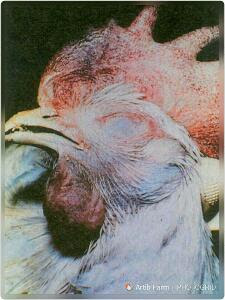
Fowl Cholera is a serious, highly contagious bacterial disease that affect a range of avian species like chickens, turkeys, and water fowl. It may be acute with sudden death. The route of infection is oral or nasal with transmission via nasal exudate, faeces, contaminated soil, equipment, and people.  Other names are Avian Pasteurellosis and Avian Hemorrhagic Septicemia . Cause Fowl cholera is caused by the bacterium Pasteurella multocida . The incubation period is usually 5-8 days. The bacterium is easily destroyed by environmental factors and disinfectants, but may persist for prolonged periods in soil and other carriers like rodents, cats and pigs. Predisposing factors include high density and concurrent infections such as Upper Respiratory Disease . Symptoms a) Affected birds may show symptoms including: * fever * bluish discolouration of the skin, wattle and comb (cyanosis) * loss of appetite * ruffled feathers * mucous discharge from the mouth * green watery diarr...

Botulism: Causes And Preventive Measures

Image
Botulism is a disease characterised by paralysis of the neck and limbs of poultry. Usually, a number of birds are affected and they quickly succumb. It can attack all domestic poultry including fowls, turkeys, water fowl, pheasants, emus and most wild birds. Carrion-eating birds can withstand large doses of the toxin without showing any symptoms. It is otherwise known as Limberneck and scientifically referred to as Clostridium botulinum . Causes   * It is mainly caused by ingestion of a toxin produced by Clostridium botulinum; a bacterium in decaying animal and vegetable matter. * Botulism occurs sporadically in poultry raised under conditions where hygiene is poor and birds have access to contaminated material. * Wild birds may contaminate domestic poultry feed or water supplies which, when ingested, may lead to infection or disease. Symptoms Symptoms of botulism start to appear 12 to 48 hours after the toxin has been ingested. The symptoms are as follow: * Affected birds w...

Feed And Space Requirement For Broiler

Image
Feed and space are essential factors that should be properly monitored for profitable commercial broiler production. Poor or inadequate feed can lead to poor growth, runts, diseases and infections. Space should be just enough for optimum broiler production as inadequate space promotes overcrowding, Heat Stress and high temperature-related infections. For a sensitive farmer, there are many methods of determining the required space and the quality, quantity of feed for broilers at different age. This is being based on the practical experience and in-depth research. Feed Requirement There are two major types of feed for broilers: the broiler starter and the broiler finisher. The difference between the two is in their protein content. Starter is more proteinous than finisher... Read More on types of feed. The broiler feed conversion ratio is 2 i.e your broiler can use 3 kg of feed to develop 1.5 kg of meat, if all thing being equal. It is simple to determine the quantity of feed requi...

Fowl Pox: Causes And Control Measures

Image
Fowlpox is the worldwide disease of poultry caused by viruses of the family Poxviridae and the genus Avipoxvirus. The viruses causing fowlpox are distinct from one another but antigenically similar, possible hosts including chickens, turkeys, quail, canaries, pigeons, and many other species of birds. Fowl pox virus is a slow spreading viral disease that causes skin lesions (dry pox) or diptheritic lesions (wet pox). The incidence of disease is variable depending on climate, management, hygiene, biosecurity, and use of a regular vaccination program. Symptoms/Lesions Dry pox results in scabs and lesions around the comb, wattle, ear lobes, and eyes. Wet pox lesions are associated with the oral cavity and the upper respiratory tract, especially the larynx and trachea. Wet pox is more serious, results in higher mortality, and is a source of current industry problems. The course of the disease in individual birds is from 10 to 14 days and base on a flock, it generally lasts 6 to 10 weeks....

Prolapse In Poultry: Causes And Treatment

Image
Prolapse vent in chickens is a condition in which the lower part of a hen’s oviduct turns inside out and protrudes through the vent. It is totally normal for the vent to temporarily prolapse when laying but definitely not normal for it to remain that way. It is a disease that majorly affect layers but that does not mean it cannot affect broilers, turkey or any other birds. Prolapsed vent is a serious condition that can be treated if detected early but likely to recur. It is also known as prolapsed oviduct or cloacal prolapse. Causes There are various factors that can contribute to prolapsed vent but soon of the major causes are: 1.) Diet – a lack of calcium and magnesium has been linked to vent prolapse. 2.) Weight – both being underweight or over weight can contribute to a vent prolapse. 3.) Age – a very young hen trying to pass a very large egg can lead to a vent prolapse. Older chickens that are obese and have lost muscle tone are also prone to vent prolapse. 4.) Infection ...

Mites: Poultry External Parasites

Image
There are three (3) major types mites as a form of ectoparasites in poultry. They are Red mite, Northern fowl mite and Scaly leg / Depluming mites. All types are capable of invading at anytime and cause several health issues which can negatively affect the birds, the farm owner's health and profit. 1. Red Mite The Red mite, Dermanyssus gallinae, is a blood sucking ectoparasite that can infest and feed on chickens and turkeys. They can invade at anytime especially during hot season. Red mite can be challenging to spot unless you have a population explosion whereby they are difficult to ignore. They are nocturnal so they hide in crevices of the poultry house during the day and emerge at night to crawl up the bird’s legs to feed on the chicken's blood. 2. Northern fowl mite Northern fowl mite, Ornithonyssus bursae, is an oval shaped mite about 1mm in size. It starts its life as a pale grey colour, then start feeding on chicken's blood till it becomes engorged mite of a bl...